
Age 0-3
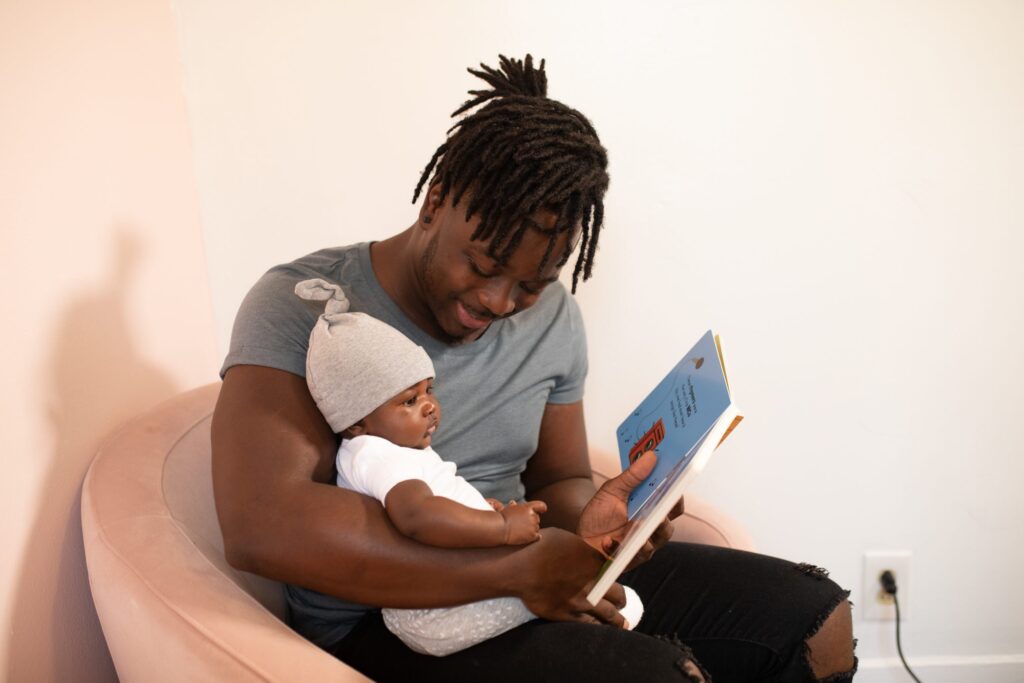
- Virtual “Board Books”
- Almost entirely image-based (they better be good!)
- Remember…parents are buying these books for a reason! (learning, interaction, eye contact, sounds, etc.)
Children’s Books 0-3
Books made for the 0-3 category is the ‘lowest-hanging fruit’ of all. These books are very easy to
make. This is because these books are largely image-based and require very few words. In
writing a book like this, you would include very simple sentences such as “A is for Apple”. At
this point, parents are reading these books to their children to develop relationships with them,
to interact with them, to teach them to communicate, to teach new words and introduce new
ideas to them, and to make eye contact with them.
There are several different types of books that are appropriate for this age group. One example
is directional & positional books. These teach children basic concepts about various directions
and positions. In a book like this, you would be likely to include words such as up, down,
between, over, and under in these types of books. So, an author making a book like this might
make a story about a child playing with his or her parents at a park and include statements like
“Johnny went down the slide” or “Sarah went back and forth on the swing.” Of course, the
story would be communicated more through the illustrations than through the words
themselves.
Books that are meant to teach single words or build vocabulary would also be good for this age
group. Babies and even toddlers begin exploring their world at this time and they are starting
to learn about what things are and what they are named. One example, of this type of book is
books that have pictures and single words beside each picture telling what it is. For instance, a
book might be about two kids going to the zoo. There may be lines of text which tell the story
about “Jenny and James” going through the zoo. However, around the pictures you would see
single words like ‘lion’ and ‘monkeys’ labeling what each one is. Generally, these words would
be no more than 5 letters long though. Other books may be designed to help kids name things
like:
- Objects around the house (clock, chair, toy)
- Body parts (nose, eye, lips, ears)
- Shapes (triangle, rectangle, circle, square)
- Colors (red, orange, yellow, green, blue)
- Etc.
These are the types of things the parents of children in this age group want to teach their kids.
At this level you’re are trying to teach and entertain children at a very basic level. You may be
able to get some ideas for these books by watching Baby Einstein videos or cartoons like
Wonder Pets.
Age 3-5

- Longer phrase & Short sentences, more conceptual
- I like to eat carrots, but I hate broccoli.
- “Can I be your friend too?¨
By the time children are in the 3-5 age range they are a little more developed and they can
handle deeper concepts. They also have more of a vocabulary, they may even know their
alphabet, and possibly may even be able to decode some written words. For this age group,
you could start including longer phrases and short sentences which are conceptual in nature.
For example, kids at this age are starting to be able to compare and they may say things like “I
like to eat carrots, but I hate broccoli” but they may not quite get other comparative concepts.
You might find a child at this age yelling at his older brother saying “when I’m older than you,
I’ll beat you up.”, for instance.
Children at this age are starting to develop relationships with other children. So, a story where
a child makes a friend in the playground may be something that they connect with. You can
introduce ideas like counting and opposites at this level. This is the age group where children
start getting into language a little more too. They begin to like rhyming words and limericks;
that is why Dr. Seuss books are so popular with this age group. They also start to understand
alliteration, enjoying sentences like “Tiny Tina takes tea at ten…” Someone who wanted to
write books for kids at this level might look to cartoons like Dora the Explorer or Bubble Guppies
for inspiration.
One of the great things about writing children’s books, especially at this level, is that you know
that they may look back when they are older and remember the story that you wrote. A
teacher once came up to Jay, for example, and told him that she was reading a book of his to
her child and he loved it. She said she was going to take it to school the next day and read it to
the students in her class. This made Jay feel great, and it should have. It is not every day that
one gets to make an impact like that
Age 5-7

- Problem solution books
- What would you do?
- Where do you think the kitty is hiding?
Children’s Books 5-7
The plot thickens when you reach the 5-7 age group. At this point kids know a lot more and
they get deeper concepts. In fact, at this age a lot of parents are shocked because they don’t
realize their ‘little baby’ understands so much now. At this age, you can start presenting
problems and solutions in your books.
It is also really great to start getting interactive wit kids at this age. Because of this you can set
questions into the books for parents to ask their kids and vice versa. Books set up to where
parents and kids are supposed to take turns reading are good for this age group as well.
Kids at this age typically like books that teach social skills and life situations. For instance, a girl
in this age group may like a story about a girl who has an argument with her best friend at
school and has to find a way to make up with her. Parents of a kid at this age may want to buy
them a book about how to use good manners or crafts books that help them interact with their
kids. Simple how-to and instructional books are great for kids at this age as well.
You can use Jay’s Bookstorming Idea Wizard. This is a tool which will be available for
you in the member’s area. It is very easy to use. Don’t hesitate to start playing around with it.
The way it works is you choose something from each of the categories and combine each of
them to make a story. For example, you may choose a shark from the ‘characters’ category and
‘how to brush your teeth’ from the ‘Learning/Concepts’ category. Then, combining the two,
you may come up with a story about a shark teaching his younger shark brother how to brush
his teeth. Of course, kids at this age level already know how to brush their teeth, so the point
of the story would be directed more toward the older brother teaching the younger one.
Anyhow, this is a really fun and helpful tool for coming up with new ideas. If you look to the
right-hand side, you will see that it is set up to help you with your research as well. It can help
you to create children’s books for kids at any developmental level.
The kids in this age group are early readers. You will want your stories to include short
sentences with simple words that they can read easily. At the same time, 7-year-olds are able
to read a good deal better and can handle more situational type of stories that are written with
longer sentences. In other words, they begin reading pre-chapter books, most of which pose
some sort of moral dilemma. The TV show Franklin and the books that the show derived from
appeal to kids at this level and would be a good source of inspiration for you. Franklin goes to
the Doctor, for instance, would be great book to use as a model.
Children’s Books 7-9

This is where it gets interesting, because kids are starting to read on their own for pleasure…
The 7-9 year old age group is a great deal more advanced. This is where kids really begin
reading for pleasure. By this time they have their own opinions of what they like. They are also
at the age where they starting to ask for books on Kindle and from other outlets. These books
are a little harder to write, but that also means less competition. You have to be able to get a
little more creative and zany when writing for this age group.
At this point in time kids start reading chapter books and comic-style books. They generally like
school-related books and books involving humor. Captain Underpants, Diary of a Wimpy Kid,
and The Fart Book are examples of books that children like at this age.
Age 9+
- Anything goes! Fiction, non-fiction etc.
- Kids lit, start here… Diary of a wimpy kid, Harry Potter, Hunger Games, etc.
All bets are off when it comes to kids that are 9 years old or older. By this time kids are
generally pretty intelligent and have their own opinion of what they like. They will read non-
fiction just as quickly as they will a fiction books. They also tend to like serious books just as
much as humorous ones. Obviously, chapter books like Harry Potter and Diary of a Wimpy
Kid are popular among this age group, but this is also the time in which they start to move to
more in-depth stories, like The Hunger Games.
Jay is very proud of being a children’s book author. If anyone is looking at going into the
children’s book market specifically, you are lucky because you now have the idea wizard and
there will be more information about this added to the member’s area soon. More
information about children’s books will also be covered in future training sessions. To see
some of the books currently most beloved by teachers and children, visit
ReadingRockets.com. This will also help you to understand what books are popular among
certain age groups.